China–Sri Lanka Educational Cooperation
How Educational Exchanges and Cooperation Can Better Contribute to the Development of China-Sri Lanka Friendly Relations
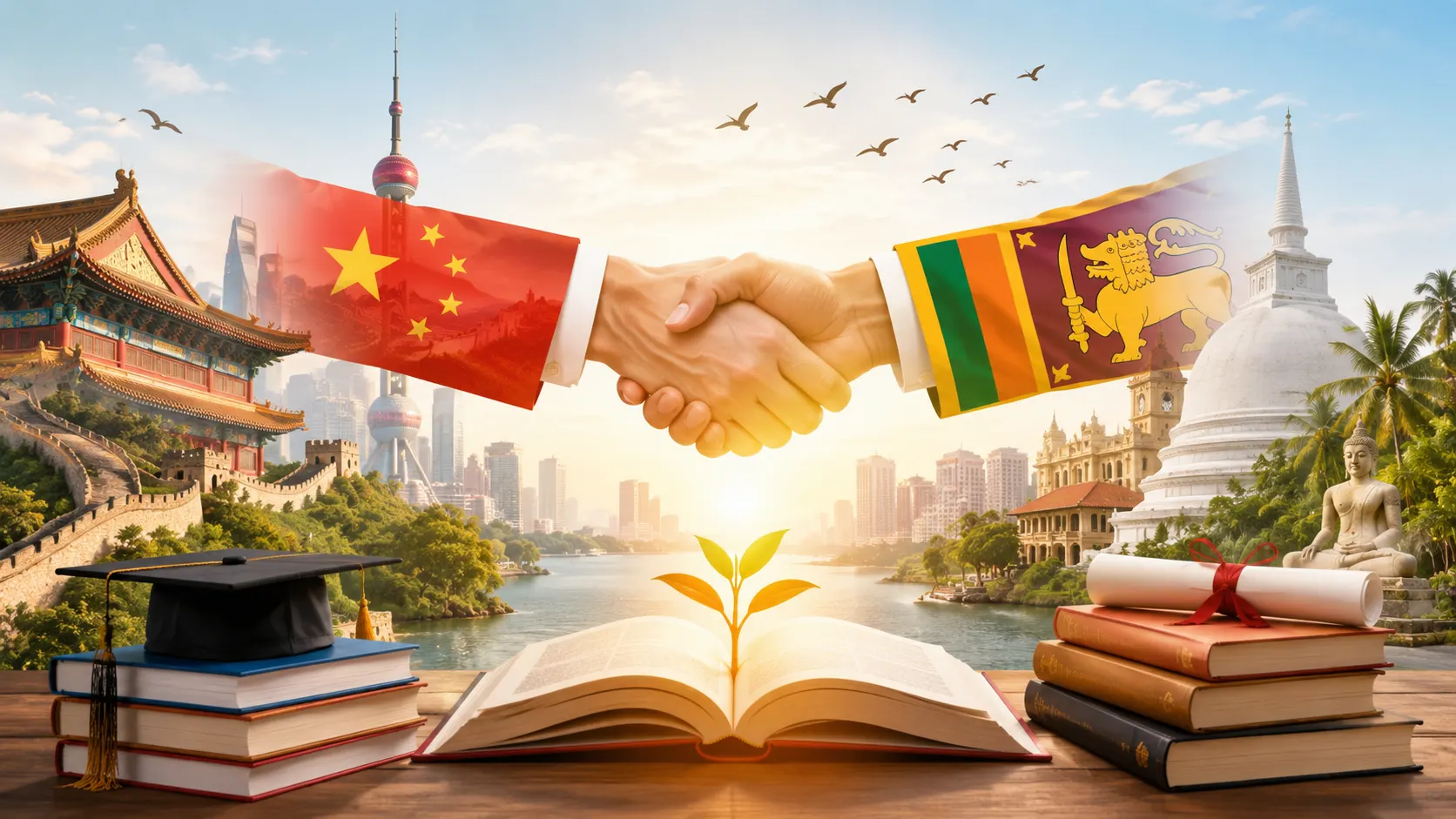
The friendly exchanges between China and Sri Lanka have a long history and can be traced back to the era of the ancient Maritime Silk Road. In the Ming Dynasty, Admiral Zheng He made seven voyages to the Western Seas and arrived in Sri Lanka (ancient Ceylon) many times, opening the prelude to friendly exchanges between the two countries. Since the establishment of diplomatic relations in 1957, China-Sri Lanka relations have maintained a sound development momentum. Sri Lanka was one of the first countries to respond to the Belt and Road Initiative. The two countries have established a strategic cooperative partnership featuring sincere mutual assistance and everlasting friendship. Against the backdrop of the complex and changing international situation today, people-to-people exchanges, especially educational exchanges and cooperation, are increasingly becoming a fundamental and guiding force for the development of state-to-state relations. Through knowledge sharing, value communication and talent cultivation, educational exchanges and cooperation can inject strong and sustainable impetus into the development and upgrading of bilateral relations.
I. Strategic Value of Educational Exchanges and Cooperation in China-Sri Lanka Bilateral Relations
For the development and upgrading of China-Sri Lanka friendly relations, deepening educational cooperation is not only an inevitable requirement to consolidate traditional friendship, but also a necessary choice to meet the challenges of the new era and open up a new situation of cooperation, bearing important strategic value. Starting with an analysis of the current situation and achievements of China-Sri Lanka educational exchanges and cooperation, this paper explores the opportunities and challenges faced at present, and on this basis puts forward systematic suggestions, aiming to provide a reference for bilateral educational exchanges and cooperation to better serve the development and upgrading of China-Sri Lanka friendly relations.
II. Historical Evolution and Current Situation of China-Sri Lanka Educational Exchanges and Cooperation
(I) Historical Context: From School Aid to Comprehensive Cooperation
China-Sri Lanka educational cooperation has undergone a gradual evolution from one-way assistance to two-way interaction and from hardware construction to software upgrading. Early cooperation was mainly focused on China’s aid in building schools for Sri Lanka, such as several middle schools built in the last century, which provided important support for the development of basic education in Sri Lanka. Entering the 21st century, with the rapid development of China’s economy and the accelerated internationalization of higher education, bilateral educational cooperation has entered a period of rapid development.
China began to provide government scholarship quotas to Sri Lanka in 2005, marking the start of a new stage of systematic joint talent cultivation. Since then, the scale of scholarships has been continuously expanded, covering undergraduate, master’s and doctoral levels. The professional fields of scholarships have also expanded from language and culture to applied disciplines such as engineering technology, medicine, agriculture and marine science. As a result, many Sri Lankan students go to China to study every year with Chinese government scholarships or university-independent scholarships, making China an important destination for Sri Lankan students to study abroad.
(II) Current Pattern: A Multi-level and Wide-ranging Cooperation Trend
At present, China-Sri Lanka educational exchanges and cooperation show a sound development trend of being multi-level and wide-ranging.
First, in higher education, universities of the two countries have established various cooperation mechanisms. Renowned Chinese universities such as Tsinghua University and Beijing University have set up inter-university cooperative relations with the University of Peradeniya and the University of Colombo in Sri Lanka, carrying out exchanges and cooperation activities such as student exchanges, joint research and faculty visits. In 2014, the ministries of education of China and Sri Lanka signed a Memorandum of Understanding on Educational Exchanges and Cooperation, laying a policy foundation for the institutionalized development of bilateral educational cooperation.
Second, in vocational education, China has actively responded to the economic and social development needs of Sri Lanka and carried out a lot of skill training cooperation in fields such as tourism management, information technology and infrastructure construction. The establishment of the China-Sri Lanka Vocational Education Cooperation Alliance in 2021 marked a new institutionalized stage of vocational education cooperation between the two countries.
Third, in the promotion of language and culture, there are three Confucius Institutes in Sri Lanka, making it one of the countries in South Asia with the densest layout of Confucius Institutes. Confucius Institutes not only teach Chinese language, but also serve as an important platform for introducing Chinese culture and promoting people-to-people exchanges. In addition, many Chinese universities offer courses on Sinhala, Sri Lankan history and culture, cultivating a number of specialized talents who have engaged in Sri Lanka studies.
Fourth, in scientific research cooperation, the two countries have carried out joint research in fields such as marine science, climate change, infectious disease prevention and control, and agricultural technology, and established a number of joint laboratories and research centers, which have well served the economic and social development needs of Sri Lanka.
(III) Remarkable Achievements: Dual Gains in Talent Cultivation and People-to-People Bonding
Educational exchanges and cooperation have made tangible contributions to the development and upgrading of China-Sri Lanka relations.
First, a number of compound talents who are familiar with the national conditions of both countries and committed to the cause of bilateral friendship have been cultivated. Many Sri Lankan students who studied in China have returned to work in government departments, enterprises and universities, becoming the backbone force of promoting China-Sri Lanka cooperation.
Second, it has promoted people-to-people bonding and cultural integration. Through educational exchanges and cooperation, people of the two countries, especially the younger generation, have enhanced mutual understanding and reduced cognitive biases. Sri Lankan people’s perception of China has changed from a “distant major power” in the early days to a “trustworthy cooperative partner”, which is closely related to the in-depth development of educational exchanges and cooperation.
Third, it has served the national development needs of Sri Lanka. Technical and managerial personnel trained with China’s assistance have played an important role in Sri Lanka’s post-war reconstruction, infrastructure development and industrial upgrading, reflecting the practical value of educational exchanges and cooperation.
III. Opportunities and Challenges for China-Sri Lanka Educational Exchanges and Cooperation in the New Era
(I) Historical Opportunities: Strategic Alignment and Demand Resonance
At present, China-Sri Lanka educational exchanges and cooperation are facing unprecedented development opportunities.
First, the in-depth alignment of the Belt and Road Initiative with Sri Lanka’s national development strategy. Sri Lanka has put forward the “Vision for Prosperity and Splendor” development strategy, committed to building an Indian Ocean shipping, logistics and commercial center, which is highly aligned with the Belt and Road Initiative. Educational exchanges and cooperation can provide talent and intellectual support for the alignment of the initiative and strategy, especially cultivating urgently needed talents in fields such as port operation, maritime law and international trade rules.
Second, the technological empowerment of digital education and distance education. The Covid-19 pandemic has accelerated the digital transformation of education, opening up new channels for China-Sri Lanka educational cooperation. Through online courses, virtual laboratories and remote internships, geographical restrictions can be broken, and the coverage and beneficiary scope of educational exchanges and cooperation can be expanded, enabling more Sri Lankan students to have access to high-quality Chinese educational resources.
Third, new opportunities brought by the Regional Comprehensive Economic Partnership (RCEP). Although Sri Lanka has not yet joined the RCEP, the trend of regional economic integration brought about by its implementation will enhance Sri Lanka’s motivation to strengthen educational exchanges and cooperation with Southeast Asian countries, creating new possibilities for China’s educational cooperation with Sri Lanka and third parties.
Fourth, the political guarantee for the upgrading of bilateral relations. In 2022, on the occasion of the 65th anniversary of the establishment of diplomatic relations, the two sides reaffirmed their commitment to deepening the strategic cooperative partnership, providing a solid political foundation for educational exchanges and cooperation. In 2023, Sri Lanka’s former President Ranil Wickremesinghe visited China, and the two sides reached new consensus on strengthening people-to-people and cultural exchanges.
(II) Practical Challenges: Structural Contradictions and External Interference
At the same time, China-Sri Lanka educational exchanges and cooperation are also facing undeniable difficulties and challenges.
First, the imbalance between scale and quality. Although the number of Sri Lankan students coming to China has continued to grow, the cultivation of high-level and high-quality talents is still insufficient. The proportion of doctoral students is relatively low, the joint training mechanism is not perfect, the quality of dissertations is uneven, and some Sri Lankan students face problems such as language barriers and cultural adaptation difficulties.
Second, the matching degree between disciplinary layout and Sri Lanka’s development needs needs to be improved. At present, Sri Lankan students are mainly concentrated in traditional fields such as language and business, while the cultivation of professional talents in fields urgently needed by Sri Lanka such as port logistics, marine engineering, water resources management and disaster prevention is relatively weak, resulting in a structural contradiction between educational supply and talent demand.
Third, the sustainability of educational cooperation is facing a test. Sri Lanka has experienced a severe economic crisis in recent years, with depleted foreign exchange reserves and sharp currency devaluation, leading many outstanding students to give up the opportunity to study in China due to economic difficulties. At the same time, the marginal benefit of China’s scholarship quotas is declining, making it an urgent task to innovate funding models and improve the input-output ratio.
Fourth, there is an increase in interference from geopolitical factors. Some Western media and think tanks deliberately hype up the so-called “debt trap” narrative and slander China-Sri Lanka educational cooperation, affecting the cognition of some Sri Lankan people.
Fifth, the pressure of transforming the mode of educational exchanges in the post-pandemic era. Although online teaching during the pandemic ensured the continuity of educational cooperation, it also exposed problems such as the digital divide, insufficient teacher-student interaction and lack of practical links. How to build a new and efficient online-offline integrated educational cooperation model requires joint exploration by both sides.
IV. Thoughts on the Path to Deepen China-Sri Lanka Educational Exchanges and Cooperation
In response to the above opportunities and challenges, the author believes that China and Sri Lanka should systematically promote the quality upgrading of educational exchanges and cooperation from the following dimensions to better serve the development and upgrading of bilateral friendly relations.
(I) Optimize Top-level Design and Strengthen Planning Guidance
Educational exchanges and cooperation cannot stay at the level of spontaneous and scattered projects, but need to be incorporated into the overall framework of bilateral relations for long-term planning. It is suggested that the governments of the two countries hold regular ministerial-level educational meetings, formulate action plans for educational cooperation, and clarify phased goals and key areas.
First, in terms of cooperation mechanisms, drawing on the experience of China’s educational exchanges and cooperation with ASEAN and Africa, a “China-Sri Lanka Educational Cooperation Forum” mechanism can be established to bring together the efforts of the government, universities, enterprises, social organizations and other parties to form a multi-stakeholder participation network for educational cooperation.
Second, in terms of resource allocation, educational cooperation should be considered in conjunction with infrastructure cooperation and industrial cooperation, and a compound cooperation model should be explored to make educational exchanges and cooperation better serve Sri Lanka’s economic and social development and enhance the sense of gain of the local people.
(II) Focus on Capacity Building and Improve Cultivation Quality
Quality is the lifeline of educational exchanges and cooperation. In response to the current problems, China and Sri Lanka should make joint efforts in the following aspects.
First, improve the preparatory education system. In view of the weak Chinese language foundation of Sri Lankan students, it is necessary to strengthen preparatory education for international students coming to China. Special preparatory bases should be set up in Sri Lanka or Chinese universities to strengthen language training and professional connection, and improve students’ adaptability after admission.
Second, innovate new models of talent cultivation. Promote new models of joint cultivation and expand the scale of double-degree programs, enabling students to grow into truly international talents through learning experiences in both countries. At the master’s and doctoral levels, a strict joint supervisor system and dissertation quality monitoring mechanism should be established to ensure the quality of degree awarding.
Third, strengthen practical teaching links. For applied disciplines, enterprise resources should be actively introduced to establish internship and training bases. For example, teaching practice sites can be set up at the sites of China-aided projects such as ports, power stations and highways in Sri Lanka, allowing students to improve their professional capabilities in the actual working environment and deepen their understanding of Chinese technical standards and engineering culture.
Fourth, establish an alumni tracking and service mechanism. Set up an association of Sri Lankan students who have studied in China to build an alumni exchange platform and provide career development support for returned graduates. Through the alumni network, the effectiveness of educational cooperation can be tracked continuously, improvement suggestions can be collected, and at the same time, alumni can play a bridge role in promoting China-Sri Lanka cooperation.
(III) Align with Development Needs and Optimize Disciplinary Layout
The vitality of educational exchanges and cooperation lies in serving development needs. In-depth research should be conducted on the talent gap in the implementation of Sri Lanka’s “Vision for Prosperity and Splendor”, and the cooperative disciplinary layout should be adjusted dynamically.
First, prioritize the development of key fields. Strengthen cooperation in key fields such as marine science, port logistics, water conservancy engineering, disaster management, public health and agricultural science and technology. These majors are not only urgently needed for Sri Lanka’s development, but also disciplines where China has comparative advantages. The two sides may consider setting up special scholarship programs and expanding enrollment in these fields.
Second, foster emerging interdisciplinary disciplines. Comply with the development trend of the digital economy, strengthen cooperation in emerging fields such as artificial intelligence, big data, e-commerce and digital finance, and help Sri Lanka seize the opportunities of the Fourth Industrial Revolution. At the same time, pay attention to global issues such as climate change and biodiversity conservation, and carry out joint research and talent cultivation.
Third, attach importance to vocational education cooperation. Vocational education serves employment and industrial development directly and should be a key direction for future cooperation. Relying on China’s industrial advantages in intelligent manufacturing, new energy, modern agriculture and other fields, high-level vocational and technical training centers can be built in Sri Lanka to carry out order-based training and cultivate and deliver high-quality skilled talents for the development of local industries.
(IV) Innovate Cooperation Forms and Expand Exchange Dimensions
On the basis of consolidating traditional student exchanges, efforts should be made to explore new forms and carriers of educational exchanges and cooperation.
First, develop online education and digital cooperation. Consider building a “China-Sri Lanka Digital Education Cooperation Platform” to integrate high-quality Chinese online course resources and open them to Sri Lankan universities and the public. Carry out remote teacher training to help Sri Lankan teachers improve their information-based teaching capabilities. Explore the establishment of a cross-border credit recognition mechanism to reduce the cost of student mobility.
Second, strengthen basic education cooperation. Current bilateral cooperation is mainly focused on higher education, with relatively weak cooperation in basic education. Drawing on China’s experience in the development of basic education, cooperation in principal/headmaster training, teacher research and training and teaching material development can be carried out in Sri Lanka to help improve the quality of basic education and cultivate a social foundation of understanding and friendship with China in the long run.
Third, promote the integration of education, science and technology and industry. Promote the establishment of industry-university-research cooperation alliances between Chinese universities, research institutions and Chinese-funded enterprises in Sri Lanka, and carry out technological research and development and talent cultivation around the industrial development needs of Sri Lanka. For example, set up a Finance and Business School in the Colombo Port City to realize the organic connection between the education chain, talent chain and industrial chain.
Fourth, deepen the connotation of people-to-people exchanges. Educational exchanges and cooperation are not only about knowledge imparting, but also about value communication and cultural mutual learning. Contents such as China’s development experience, the history of China-Sri Lanka relations and Asian values should be added to the curriculum system to guide students to understand China in a comprehensive and objective way. At the same time, encourage Chinese students to learn Sinhala and Tamil, understand Sri Lanka’s multiculturalism, and cultivate two-way cultural understanding capabilities.
(V) Tell Good Stories of Cooperation and Create a Sound Atmosphere
In response to external interference and cognitive biases, both sides should take the initiative to strengthen the international communication of educational cooperation.
First, give play to the important role of the media and think tanks. Support the media of the two countries to carry out joint interviews on educational themes, produce documentaries and special reports, and tell the growth stories of international students. Encourage think tanks to carry out research on the effectiveness evaluation of educational cooperation, speak with data and facts, and counter false narratives.
Second, establish a transparent and open information release mechanism. Regularly release information and achievements of China-Sri Lanka educational cooperation, enhance the transparency of cooperation, and respond to external concerns.
Third, build brand projects of educational cooperation. Concentrate resources to build a number of demonstrative cooperation projects, such as the “China-Sri Lanka Friendship Hospital” (medical education cooperation) and the “China-Sri Lanka Joint Marine Research Center”, forming visible, experiential and communicable cooperation landmarks to enhance the influence of cooperation through the demonstration of key projects.
Fourth, strengthen educational cooperation under multilateral frameworks. Promote the sharing of China-Sri Lanka educational cooperation experience in multilateral mechanisms such as South-South cooperation, BRICS cooperation and China-South Asia cooperation, enhance the international recognition of cooperation, and at the same time introduce third-party resources to enrich the connotation of cooperation.
V. Illuminating the Bright Prospect of China-Sri Lanka Friendly Relations with the Light of Education
Educational exchanges and cooperation are an undertaking that benefits the present and future generations. For countries with a profound historical origin and common development tasks such as China and Sri Lanka, deepening educational exchanges and cooperation is of special and important significance. It is not only a means of talent cultivation, but also a bond for inheriting friendship, a bridge for heart-to-heart communication and a cornerstone for creating a common future.
Looking to the future, China-Sri Lanka educational exchanges and cooperation are standing at a new historical starting point. Faced with opportunities and challenges, both sides should plan educational cooperation from a higher standpoint, improve the quality of cooperation with more concrete measures, and expand the space for cooperation with a broader vision. Through educational exchanges and cooperation, we will cultivate more inheritors of China-Sri Lanka friendship, builders of the development of the two countries and guardians of Asian civilizations, inject a steady stream of youthful vitality into the China-Sri Lanka strategic cooperative partnership, and make positive contributions to building a closer China-South Asia Community with a Shared Future.
As an ancient Chinese educator said, “Amity between nations lies in the close bond between their peoples, and such bond lies in heart-to-heart communication.” Educational exchanges and cooperation are the most effective way to achieve heart-to-heart communication between peoples. We look forward to the more brilliant blooming of the flower of China-Sri Lanka educational exchanges and cooperation under the joint efforts of the governments and peoples of the two countries, and writing a new chapter for the development and upgrading of China-Sri Lanka friendly relations.
By Li Lisi, Nanchang University College of Science and Technology, China