Jingmai Mountain: Where Nature, Ancestors, and Tea Become One
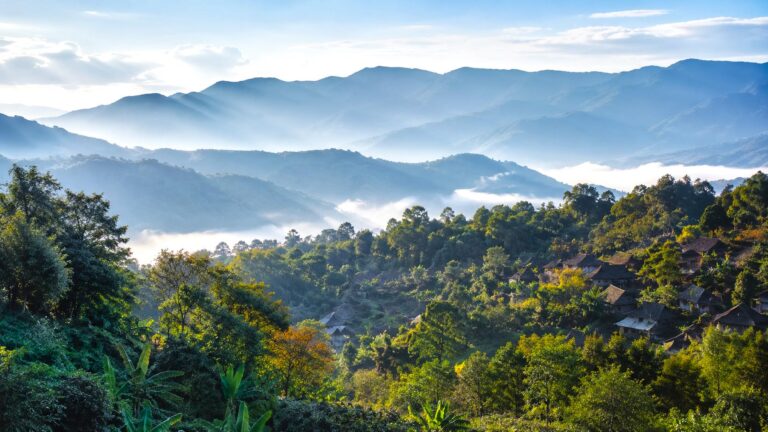
Pu’er, Yunnan — High in the misty mountains of southwestern Yunnan, where clouds roll through ancient valleys like silk ribbons and cherry blossoms bloom beside thousand-year-old tea trees, time moves differently. Here, on Jingmai Mountain, the past isn‘t just remembered — it is lived.

On September 17, 2023, this remarkable landscape became China’s 57th UNESCO World Heritage Site, and the first in the world dedicated entirely to tea culture. But for the Blang and Dai people who have called this mountain home for over a millennium, the UNESCO title is merely official recognition of what they have always known: Jingmai Mountain is sacred.
A Living Museum of Tea
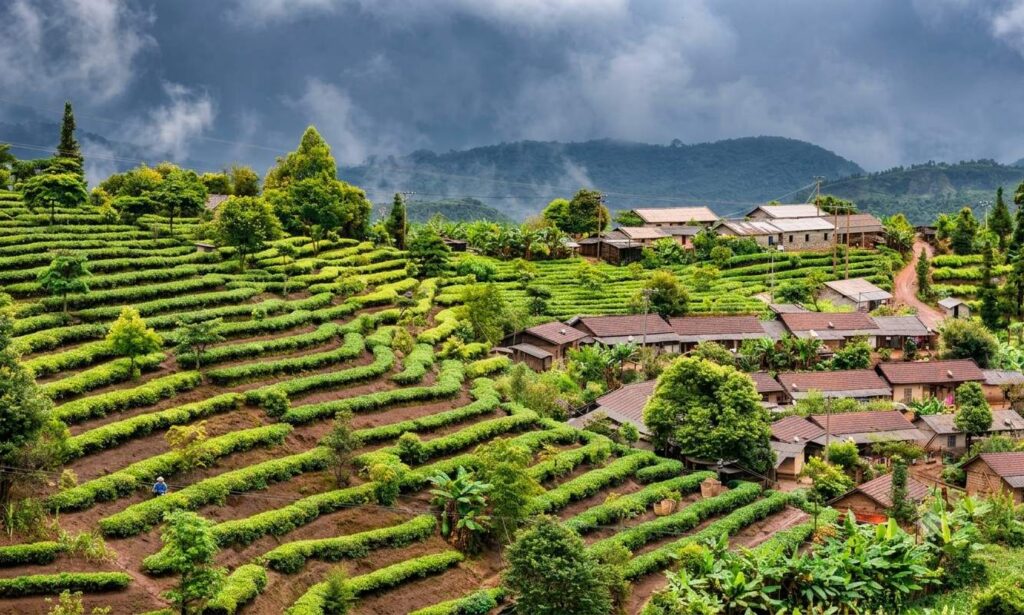
Jingmai Mountain is not a plantation in the conventional sense. There are no orderly rows of monoculture tea bushes stretching to the horizon. Instead, walking through the ancient tea forests feels like entering a cathedral — towering shade trees form a canopy overhead, while tea trees grow quietly beneath them, surrounded by ferns, flowers, and the constant hum of insects and birds.
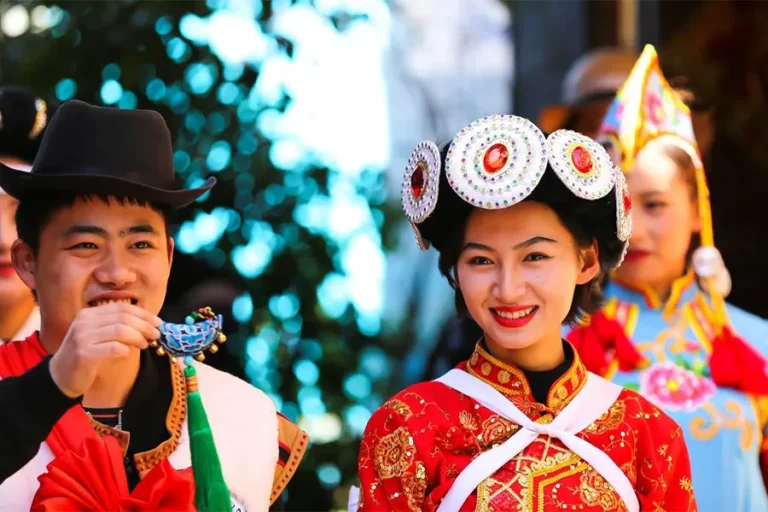
This is the understorey tea cultivation system, perfected over 1,000 years by the Blang people (who arrived in the 10th century) and later joined by the Dai (in the 14th century). The method creates a three-dimensional forest ecosystem: tall trees provide dappled shade, tea trees thrive in the middle layer, and ground plants enrich the soil naturally.
No pesticides. No chemical fertilizers. The forest takes care of itself.
The result is not just exceptionally pure tea, but an astonishing biodiversity hotspot. Scientists have documented 943 plant species, 187 land vertebrates, and 134 bird species within the heritage area — including the legendary “bee king tree,” a 50-meter banyan draped with some 70 beehives, which local people protect as a living symbol of nature‘s balance.
The Villages: Where Tradition Breathes
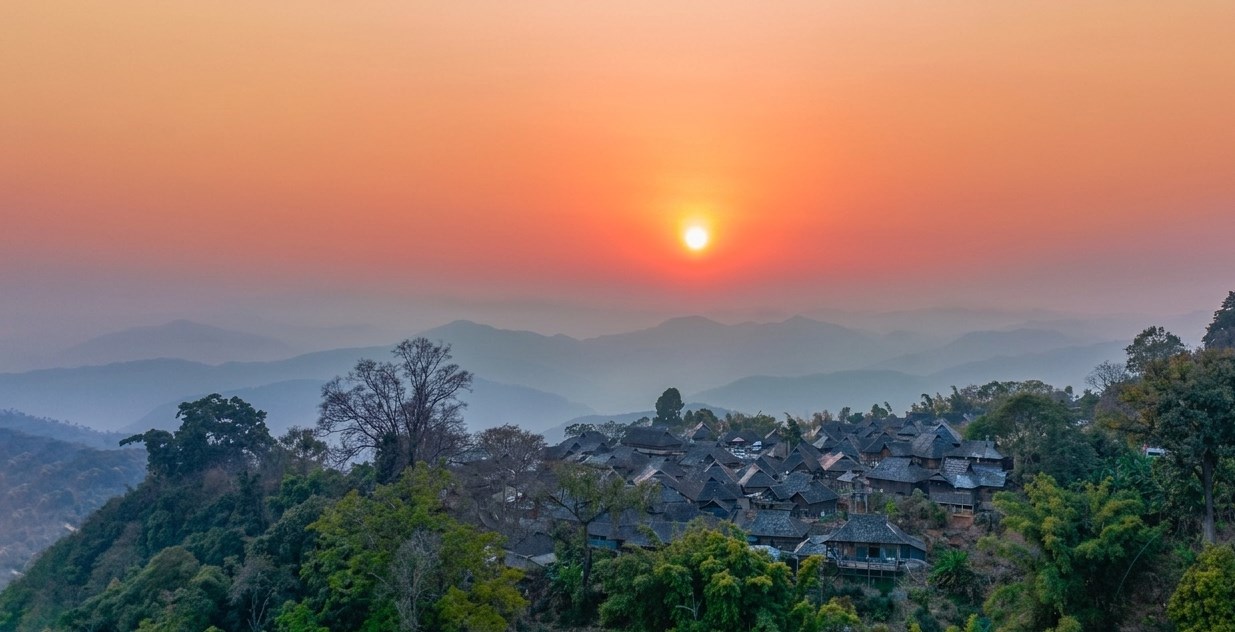
Scattered across the mountain are nine traditional villages, home to about 5,000 residents. The most evocative include Nuogang, a Dai village of wooden stilt houses that appears unchanged from a century ago, and Wengji, a Blang settlement famous for sunset views over the tea terraces.

In Mangjing Village, visitors can stand at the Tea Ancestor Temple, where every April the Blang people gather to honor Pa Aileng — the tribal chief who, according to legend, first discovered tea’s healing power when wild tea trees saved his people from an epidemic.
A Blang elder explains: “We don‘t own the tea trees. We belong to them. Our ancestors said: I will not leave you gold or silver — you will use them up. I will not leave you cattle or horses — they may die. So I leave you tea trees, for your children’s children to use forever.”
That promise has been kept for a thousand years.

The Sea of Clouds
Ask any photographer who has visited Jingmai Mountain, and they will mention one thing above all: the sea of clouds
From December through January, the valleys below the mountain fill with thick, rolling mist that appears solid as snow from above. Villages seem to float on white oceans. Ancient tea trees emerge from the fog like spirits. The sunrise transforms everything into gold and rose.
It is not hard to understand why the Blang believe spirits live among the tea trees. Standing on a viewing platform at dawn, watching clouds pour over mountain ridges like slow waterfalls, you might believe it too.
A Delicate Future
UNESCO status has brought new attention — and new pressures. In 2023, Jingmai Mountain received 346,800 visitors, generating RMB 158 million in ecotourism revenue. Tea farmers have seen incomes rise dramatically, from RMB 15,000–30,000 per hectare to RMB 90,000–120,000 per hectare after organic certification.
But local authorities and heritage managers are carefully enforcing strict tourism carrying capacities. The goal is not mass tourism, but sustainable, culturally respectful visitation. A “Digital Jingmai” system now tracks tea from leaf to cup, ensuring traceability and authenticity.
For now, the balance holds. But as one village elder told us: “The mountain has protected us for a thousand years. Now we must protect it for the next thousand.”
A Cup of Time
Sitting on a wooden balcony in Wengji Village, drinking pu‘er tea harvested from trees planted during the Song Dynasty, you realize something: this is not just tea. It is a cup of time — 1,000 years of forest wisdom, ancestral faith, and human care, brewed slowly into amber liquid.
In a world racing toward the future, Jingmai Mountain stands as a quiet, powerful reminder: some things are better when they grow slowly, in the shade, with the spirits watching over them.
By Madushan kularatne and Sameera Pulusthi from Jiangmai Mountain Village, Yunnan Province.
Chinese Mirror