Media ties between China and Sri Lanka have long maintained a sound momentum featuring friendship, pragmatism and mutual trust
A Sri Lankan media team consisting of 19 members is currently on a tour in Yunnan Province, China, and today (6/16) is the 7th day of that tour.
This media tour has been organized at the invitation of the Yunnan International Communication Center for South and Southeast Asia and with the coordination of the Sri Lanka-China Social and Cultural Cooperation Association.
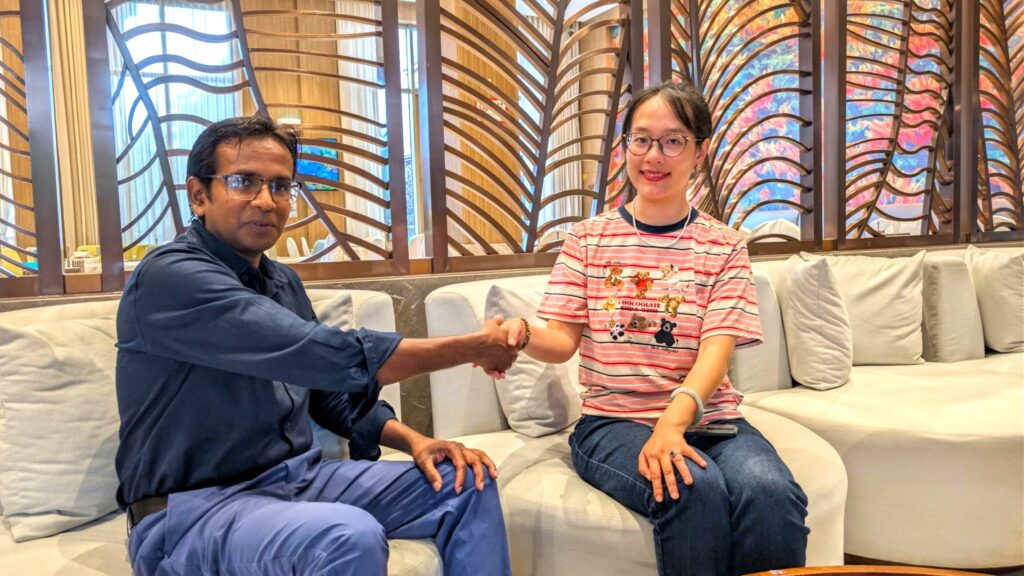
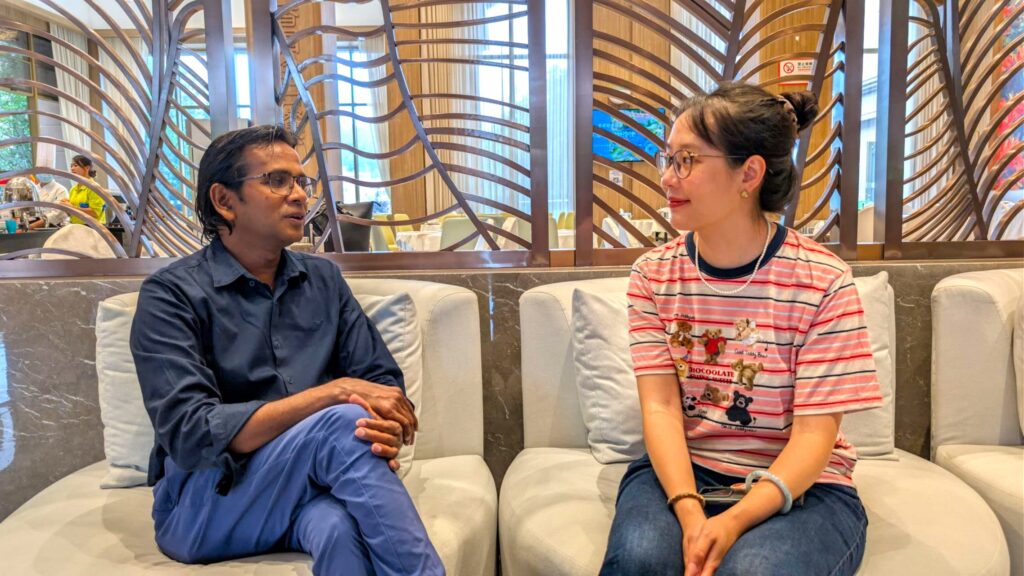
This is an interview/discussion regarding this tour conducted with Wang Huan – The person in charge of the Yunnangateway website, Yunnan International Communication Center for South and Southeast Asia, for CHINA MIRROR MAGAZINE.
CHINA MIRROR – What is your view on media relations between Sri Lanka and China?
Media ties between China and Sri Lanka have long maintained a sound momentum featuring friendship, pragmatism and mutual trust. Media outlets of the two countries serve as both recorders and facilitators of bilateral relations. This training program invites mainstream Sri Lankan journalists to China, aiming to further deepen bilateral cooperation in news reporting, international communication and new media development through face-to-face exchanges, field interviews and special training sessions. We firmly believe in-depth interactions between media professionals will boost mutual understanding between the two peoples, and foster a more positive public opinion environment for China-Sri Lanka Belt and Road cooperation and the building of a China-Sri Lanka community with a shared future.
CHINA MIRROR – Why were these Sri Lankan media practitioners selected for this media training program?
The training delegation consists of 20 members. In participant selection, we prioritized full coverage and representativeness to fully reflect the diverse media landscape of Sri Lanka. Specifically, the delegation includes staff from state-owned media (Sri Lanka Rupavahini Corporation, Sri Lanka Broadcasting Corporation, Sri Lanka News Agency) and private media (Derana TV, Daily Financial Times, Swarnavahini TV and others); it covers traditional media (television, radio, print newspapers) as well as emerging media (online news platforms, digital content creators and social media channels). The participants also comprise media management executives, senior reporters, editors, producers, personnel from media associations and freelance writers.
Such a diversified lineup ensures training outcomes can reach all segments of Sri Lankan society via media channels of varied ownership and practitioners at all levels. In addition, all participants boast solid professional competence and strong cross-cultural communication skills, making them ideal bridges to advance China-Sri Lanka media cooperation.
CHINA MIRROR – What immersive experiences have Sri Lankan media practitioners gained during this training?
Over the ten-day training program, Sri Lankan journalists enjoyed a wealth of in-depth, all-round experiences:
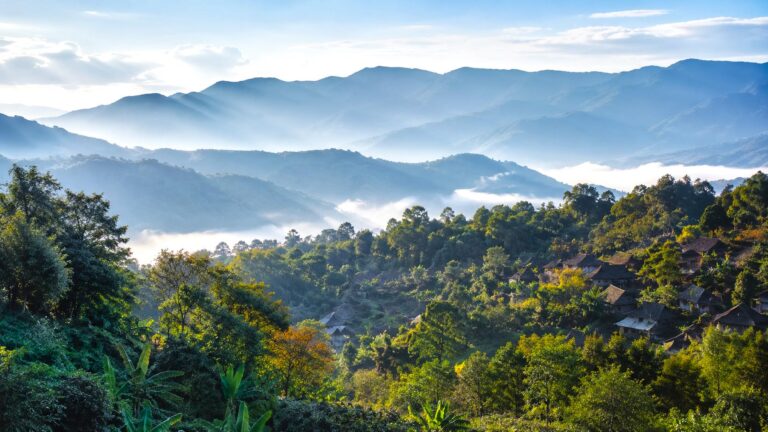
City & Industrial Field Trips: They attended the opening ceremony of the 10th China-South Asia Exposition in Kunming and interviewed Sri Lankan exhibitors; visited coffee plantations and the National Technical Innovation Center for Market Supervision in Pu’er to learn about the full industrial chain of coffee; toured ancient tea forests and traditional villages of the Blang and Dai ethnic groups at Jingmai Mountain to witness time-honored ecological wisdom of harmonious coexistence between tea forests and local communities.
World Heritage Site Visits: They explored the Cultural Landscape of Ancient Tea Forests at Jingmai Mountain (the world’s first tea-themed World Cultural Heritage) and the Chengjiang Fossil Site World Natural Heritage Museum (Asia’s sole fossil-based World Natural Heritage site).
Modern Logistics & Rural Revitalization Inspections: The group conducted research at the Yuxi International Logistics Port, Central Yunnan Grain Logistics Park, and rural revitalization demonstration villages including Xiaowan Village and Mafang Village, witnessing ecological conservation of plateau lakes and integrated cultural tourism development.
Specialized Theoretical & Practical Lectures: They attended themed courses including China-Sri Lanka Friendly Cooperation and the Path to Common Modernization from the Perspective of New Quality Productive Forces, How the Idea of “Lucid Waters and Lush Mountains are Invaluable Assets” makes Yunnan Coffee Known Worldwide, China’s Practical Experience in World Heritage Conservation, and China’s Practical Experience of Rural Revitalization and Its International Communication. Besides, they also took part in the course World Heritage Conservation amid Lucid Waters and Lush Mountains and China-Sri Lanka Mutual Learning in Ecological Progress.
Journalism Practice: Daily sessions were arranged for video editing and news drafting, and participants’ works will be displayed and reviewed at the closing ceremony.
These experiences span policy theories, industrial practices, cultural preservation and ecological development, offering them a comprehensive understanding of Chinese modernization as practiced in Yunnan Province.


CHINA MIRROR – Why do Chinese tea and coffee win global popularity?
The global popularity of Chinese tea and coffee stems from a shared Chinese development philosophy and practice:
Tea: Represented by the ancient tea forests at Jingmai Mountain, China adopts an underwood tea cultivation model that sustains millennia-long harmonious coexistence between humanity and nature, forming a unique ecological and cultural landscape. Beyond rich, diverse flavors, Chinese tea embodies philosophies of harmony, inclusiveness, and reverence for nature and humanity.
Coffee: Coffee production zones in Pu’er, Yunnan, adhere to the idea that lucid waters and lush mountains are invaluable assets. We advance standardized cultivation, international certification, intensive processing and integrated cultural tourism to deliver full-chain quality control covering “from seed to cup”.
For both tea and coffee, China prioritizes ecological protection, technological empowerment and cultural integration while aligning production with international standards — this is why Chinese tea and coffee have earned trust and favor worldwide. During the training, Sri Lankan journalists witnessed firsthand how the idea of “Lucid Waters and Lush Mountains are Invaluable Assets” makes Yunnan Coffee Known Worldwide, and tasted the mellow aroma of thousand-year-old ancient tea, which serves as the most intuitive answer to this question.
CHINA MIRROR – I would like to express my gratitude to the Association for Sri Lankan China Social and Culture Cooperation for organizing this training program.
On behalf of the Chinese organizing team, I would like to extend my sincere gratitude to the Association for Sri Lankan China Social and Culture Cooperation, as well as all Sri Lankan journalist participants. Thanks to your careful organization and active participation, every session and activity — from the opening ceremony of the 10th China-South Asia Exposition to Jingmai Mountain’s ancient tea forests, coffee plantations, logistics parks, expert lectures and journalist roundtables — went smoothly. With your dedication, our Sri Lankan journalist friends have gained rare access to grassroots China, observed the pulse of China’s development, and enjoyed a fulfilling, memorable journey across Yunnan. We look forward to continued collaboration to elevate China-Sri Lanka media exchanges and cooperation to new heights.
By Madushan kularatne and Sameera Pulusthi from Yunnan Province, China, Yunsxi.
Chinese Mirror – A Series on China’s Ethnic Minorities